
The short answer
There is no single average amount of filler for the face, but many people use 1 to 2 syringes for subtle changes, and full-face treatment may take 5 or 6 syringes over one or more visits. Lips often need 0.5 to 1 syringe, while cheeks or jawline may need more. Your anatomy, goals and the product used decide the right amount.
Key takeaways
- Most filler syringes hold about 1 mL, though some products come in smaller sizes.
- Lips commonly use 0.5 to 1 syringe, and tear troughs 0.5 to 1 syringe.
- Larger areas like the cheeks and jawline often need more product.
- A conservative approach, sometimes over more than one visit, helps results look natural.
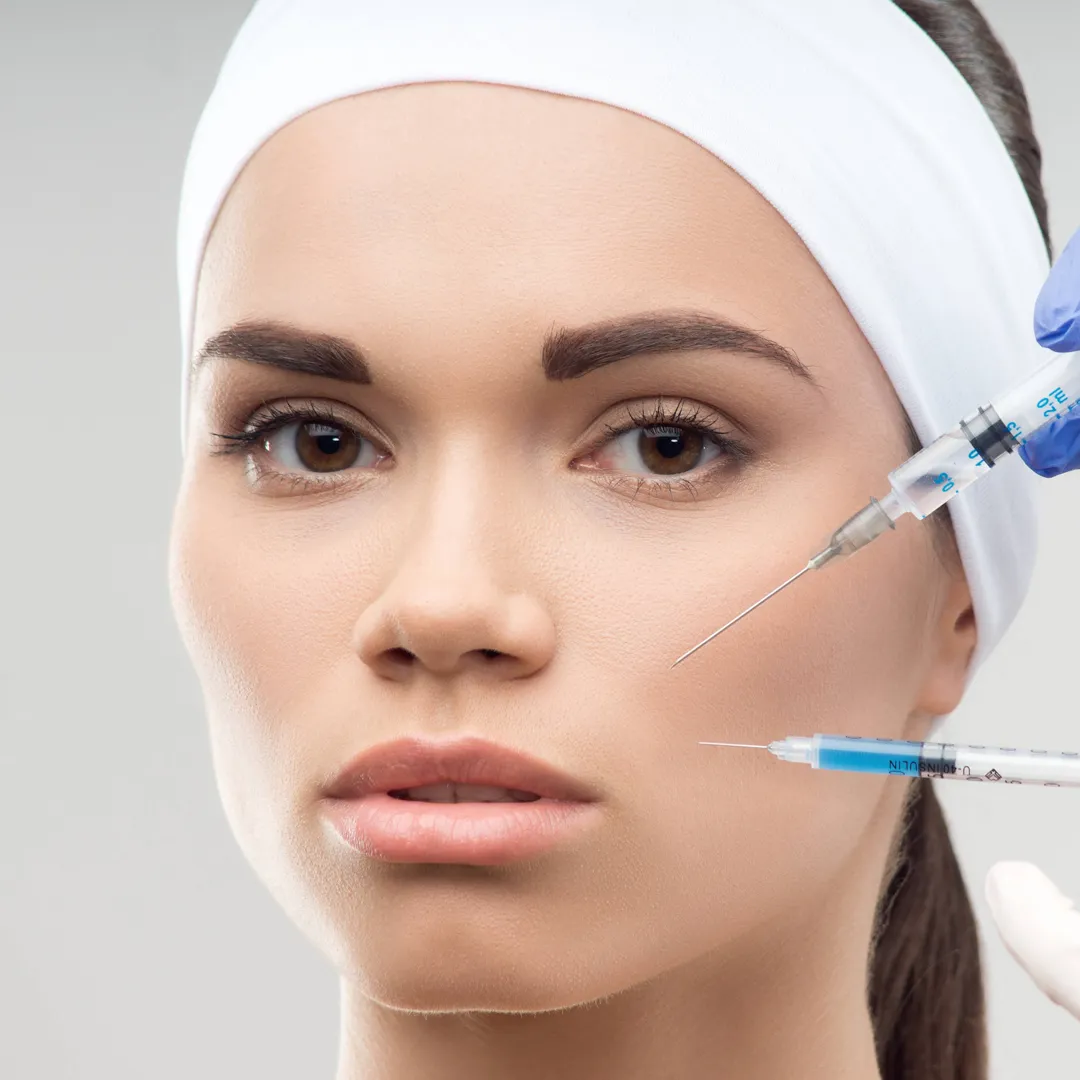
Average Amount of Filler by Area
Dermal fillers are used in a variety of areas on the face, and the amount needed depends on your facial structure, skin condition, and desired outcome. Here’s a general breakdown of the average amount of filler typically used per area:
- Cheeks – often 1 to 2 syringes per side, sometimes more
- Nasolabial folds (smile lines) – 1 to 2 syringes
- Lips – 0.5 to 1 syringe (for natural volume)
- Marionette lines – 1 syringe
- Jawline – 2 to 4 syringes (total)
- Chin – 1 to 2 syringes
- Under-eye (tear troughs) – 0.5 to 1 syringe
Most syringes contain about 1 mL of filler (some products come in smaller sizes), so while these numbers might sound high, they’re actually very modest when it comes to restoring youthful contours.
How Much Filler Do You Need?
Every face is unique. Some clients may need just 1–2 syringes for subtle enhancement, while others may require 5–6 syringes for full-face rejuvenation. The best way to determine how much filler you need is through a personalized consultation with a qualified injector at Med Spa.
At Complete Rural Medicine in Lincoln, NE, our skilled Botox and filler injectors take a conservative, tailored approach. We believe in enhancing your natural beauty—not changing it. Our team will assess your goals, facial structure, and skin to recommend the ideal treatment plan for you.
Why Trust the Injectors at Complete Rural Medicine?
🧠 Expertise – Our nurse practitioner injectors are trained in facial anatomy and aesthetics.
✨ Natural Results – We aim for subtle, balanced enhancements that don’t look overdone.
🏡 Small-Town Hospitality – You’ll get big-city results with the personalized care you expect from a local team.
Whether you’re new to injectables or ready for a full-face refresh, you can trust the compassionate team at Complete Rural Medicine to guide you every step of the way.
Book Your Filler Consultation in Lincoln, NE
Ready to discover how much filler is right for you? Schedule a consultation today with the trusted injectors at Complete Rural Medicine in Lincoln, Nebraska. Let us help you look refreshed, confident, and completely yourself.
👉 Contact us to book your appointment or learn more about our Botox and dermal filler services!
What Affects How Much Filler You Need?
The numbers above are general ranges, not a prescription. Several things change how much filler is right for you:
- Your goal: softening a fine line takes far less product than restoring lost volume in the cheeks or shaping the jawline.
- Your anatomy: bone structure, skin thickness and how much volume has been lost with age all matter.
- The product: fillers differ in thickness and lift. A firmer filler is used for deeper structure, and a softer one for lips or fine lines.
- Past treatments: if you still have some filler from a previous visit, you may need less.
A careful provider looks at your whole face, not just one line, and talks with you about balance before deciding where and how much to inject.
Types of Dermal Fillers
Most facial fillers used today are made of hyaluronic acid, a substance found naturally in the skin that holds water and adds volume. Hyaluronic acid fillers are FDA-approved for specific areas, such as lips, cheeks and smile lines, and their effects can be reversed with an enzyme if needed.
Other types, like calcium hydroxylapatite or poly-L-lactic acid, work by supporting the skin and encouraging collagen. They are used in certain areas and cannot be dissolved the same way. Your provider will explain which product fits your goals and why.
What to Expect at a Filler Appointment
Your visit starts with a review of your health history, medications and goals. Many fillers contain a numbing medicine, and a topical numbing cream may also be used. The injections themselves usually take 15 to 45 minutes, depending on how many areas are treated.
Afterward, mild swelling, redness, tenderness or bruising is common for a few days. Results are visible right away but settle over about two weeks. To lower the chance of bruising, your provider may ask you to avoid alcohol and certain supplements or pain relievers that thin the blood before your visit, but do not stop any prescribed medication without asking the provider who prescribed it.
Filler Safety and When to Call
Serious problems are rare, but they are important to know about. In rare cases, filler can block a blood vessel. Call your provider or seek urgent care right away if you notice severe or increasing pain, skin that turns white, blue or blotchy near the injection site, or any change in your vision.
The FDA advises using only FDA-approved fillers injected by a licensed health care provider, and never buying filler online or using needle-free pens. At Complete Rural Medicine, our nurse practitioners use a conservative approach and are happy to answer your questions, including how much product they recommend and why. You can learn more about our wrinkle relaxer treatments as well.
Questions & Answers
Frequently asked questions
How long do dermal fillers last?
It depends on the product and the area. Many hyaluronic acid fillers last roughly 6 to 18 months. Areas that move a lot, like the lips, tend to break down filler faster than areas like the cheeks or chin. Your metabolism, the amount used and the specific product also affect how long results last.
Are dermal fillers safe?
Fillers are generally considered low risk when an FDA-approved product is injected by a trained, licensed professional. Common side effects are swelling, redness, tenderness and bruising. Rare but serious risks include filler blocking a blood vessel, which can damage skin or vision and needs urgent care. Avoid needle-free filler pens, which the FDA has warned against.
Can you start with a small amount of filler and add more later?
Yes. Many providers prefer to start conservatively and have you return in about two weeks, once swelling settles, to see if a little more product would help. This helps avoid an overfilled look. Hyaluronic acid fillers can also be dissolved with an enzyme if needed.
Where can I get dermal fillers in Lincoln, NE?
CRM Aesthetics at Complete Rural Medicine offers dermal fillers and wrinkle relaxers at 3900 S 6th St, Suite 1, Lincoln. A nurse practitioner reviews your health history and goals and recommends a conservative amount. Call (402) 267-2645. Se habla español.
Sources & further reading
- Dermal Fillers (Soft Tissue Fillers) FDA
- Fillers: FAQs American Academy of Dermatology
- Dermal Fillers American Society of Plastic Surgeons
Your Providers
Talk with a Complete Rural Medicine provider



Complete Rural Medicine has clinics at 3900 S 6th St, Suite 1, Lincoln, NE 68502 ((402) 267-2645) and 515 2nd St, Friend, NE 68359 ((308) 646-2471).